This blog post was originally written by Luminescence @ www.myhorsez.com/nl/ and translated by HorseloverMargaux
Fun facts: Horse hybrids
Hi! This blog has a very interesting topic: horse hybrids! These are crossbreeds between donkeys, horses and zebras, in all kinds of combinations. You've probably heard of mules and hinnies, but did you know that a cross between a horse and a zebra is called a zorse? And how many of the following five facts did you already know?
Hybrid horses are very old.
The oldest crossbreed bred by humans comes from Mesopotamia, an area in Western Asia, in the north of the Middle East. The Mesopotamians crossed a domesticated donkey with a local wild donkey: we call this crossbreed a kunga.
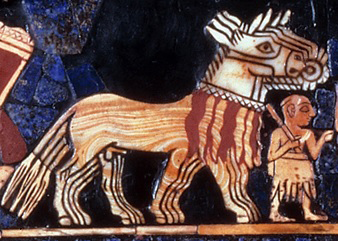 Source: Agricolae, CC BY-SA 3.0, via Wikimedia Commons
Mules are also quite ancient: Homer wrote about them in his Iliad around 700 BC, and they also appear in the Old Testament. And of course, these crossbreeds also exist in the wild, although this is quite rare.
George Washington, the first American president, was very fond of mules
In 1799, there were 57 mules on his estate! According to Washington, these animals were perfect for farm work: they could do as much work as horses, but needed less food. They also had more stamina than horses and were more athletic than donkeys. You can imagine why Washington thought they were more suitable for work on his farm!
Almost all hybrids are infertile
Horses have 64 chromosomes, donkeys have 62, and zebras have between 32 and 46, depending on the species. Simply put, a cross between these species results in an uneven number of chromosomes or mismatched chromosome pairs. This makes them infertile. Interestingly, Przewalski's horses, which have 66 chromosomes, can produce fertile offspring with horses. That’s why they’re considered subspecies, not separate species.
The difference between mules and hinnies
Or zorses and hebras, or zonkeys and donkras. Hybrids often have two names: this difference reflects the species of the parents. A mule, for example, is the offspring of a mare and a donkey: with a hinny, it’s exactly the opposite. There’s a reason for this difference in naming: crossbreeds often resemble their mother more than their father. So there’s definitely a difference between mules and hinnies.
Zorses were originally bred to prevent diseases
The tsetse fly from Africa often carries diseases that can be deadly to animals. However, zebras are rarely bitten by this fly, possibly because of their unique stripe pattern. So, zebras and horses were crossed in the hope that the flies would leave the entire herd of horses alone.
Thanks for reading this blog! Which facts did you already know? Can you think of any other interesting facts I missed?
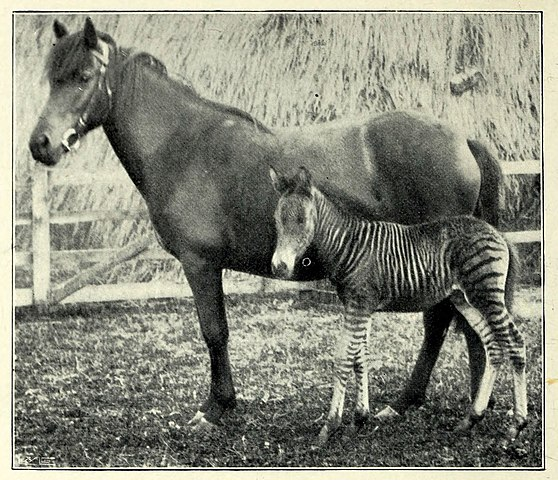 Source:The Zoologist: A Montly Journal of Natural History, 4th series, public domain via Wikimedia Commons
Thumbnail image source: Fährtenleser, CC BY-SA 4.0, via Wikimedia Commons
Source:The Zoologist: A Montly Journal of Natural History, 4th series, public domain via Wikimedia Commons
Thumbnail image source: Fährtenleser, CC BY-SA 4.0, via Wikimedia Commons