This blog was originally written by the Dutch user: Asterope @ www.myhorsez.com/nl/ and translated by Violescent
Breed in the spotlight: The Clydesdale
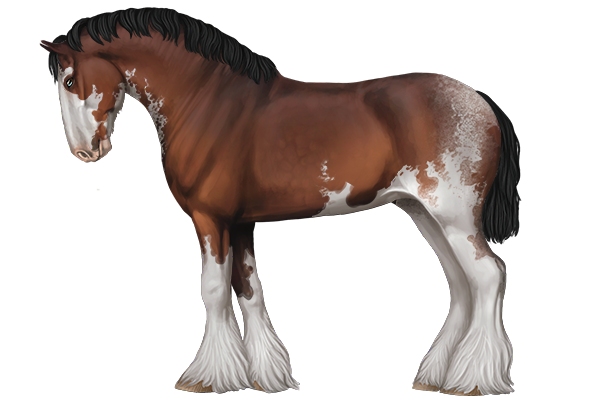
In this blog, you’ll read about the largest breed on My Horsez, the Clydesdale!
Added 16 February 2024 to the Dutch server and 7 November 2024 with the launch of the international server.
Where does the Clydesdale come from?
The Clydesdale, originally from the valley of the River Clyde in Scotland, is a well-known draft horse breed that developed in the 18th century. This breed is a great example of targeted breeding. The foundation for the breed was laid by local farmers who needed a strong, reliable workhorse for farming and transport.
They solved that by crossing their native horses with heavier stallions from England and the Netherlands. This process of crossbreeding and selective breeding eventually led to the Clydesdale we know today!
The English influence on the Clydesdale
The influence of English horses, especially the Shire, on the development of the Clydesdale is huge. Shire horses, known for their impressive size and strength, passed these traits on to the Clydesdale bloodline. Adding Shire genetics helped increase the horse’s height and strengthen its muscles, which was really important for the heavy work Clydesdales were used for. This cross didn’t just make them bigger, but also improved the breed’s stamina and work ethic.
The Dutch influence on this beautiful breed
Crossing the Dutch horses, including Friesians, introduced a different set of useful traits. Friesians, known for their elegant movement and good temperament, helped refine the Clydesdale. They improved the overall build and added a bit of grace to the movement, which made the Clydesdale not only suitable for heavy work, but also for show and parades. Even today, there are still parades where Clydesdales play the main role!
The end result!
The mix of English and Dutch bloodlines gave the Clydesdale its unique traits. This includes not only their size and strength, but also the famous feathering on their legs, a feature that can also be seen in Friesians. This genetic mix gave the Clydesdale its striking appearance, while keeping its ability to pull heavy loads.
The popularity of the Clydesdale has changed over time, especially with the rise of mechanisation in the 20th century. Instead of real horsepower, there was suddenly a lot of mechanical horsepower. Thanks to the efforts of enthusiasts and breeders, the breed has still survived. Organisations like the Clydesdale Horse Society work to promote the breed, keep track of pedigrees and organise events to keep attention on this beautiful breed!
Now that you’ve read all of this, are you planning on breeding the Clydesdale? :3