Liver
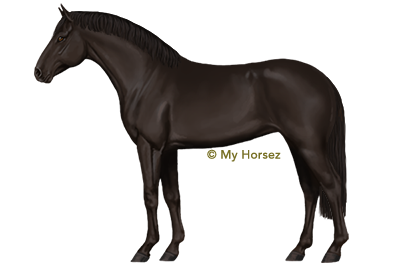
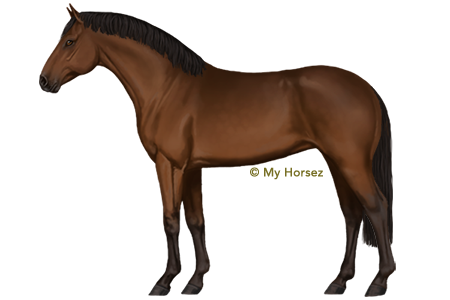
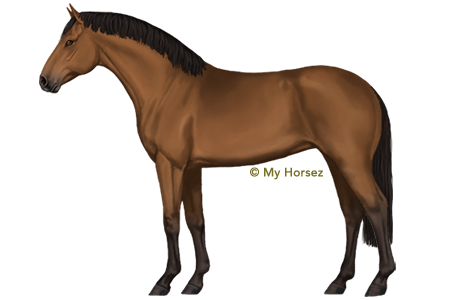
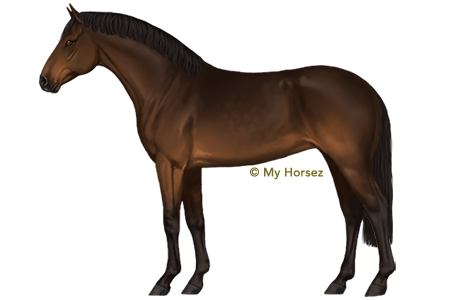
Liver is a gene that does not occur in real life, as liver chestnut is genetically just ee - so just chestnut. Indeed, chestnut can occur in real life in very light shades, but also in very dark shades, sometimes in combination with Sooty (more on this later). Since the liver gene is used on MH to get a liver chestnut horse, this gene will be listed as ‘Lv’ for the sake of explanation. Liver only shows on a chestnut base, but horses of other colours can carry this gene unnoticed. Furthermore, liver is a dominant gene, so when one liver allele is present on a chestnut, this chestnut-coloured horse will be a liver chestnut. However, dun is dominant over liver. A chestnut with dun and liver will therefore be chestnut dun. Chestnut (ee/__)* becomes liver chestnut when ee/__/Lv_ is the case. ‘Lv_’ means it can be either nLv or LvLv, i.e. single liver and double liver. Both of these have the same effect on the colour of the horse.
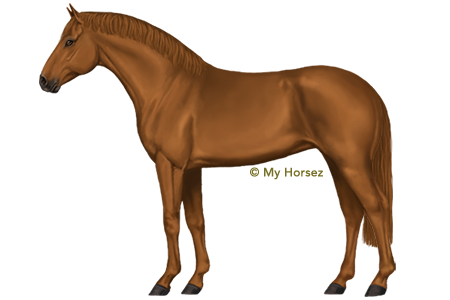
Chestnut
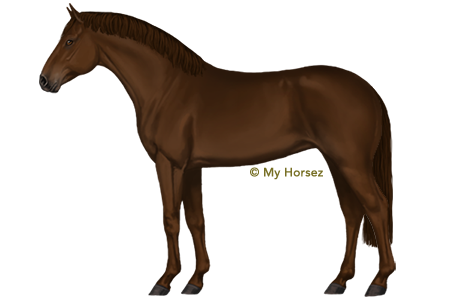
Liver Chestnut
* Note: on the second locus there are 2 horizontal dashes. This means that all agouti genes can be here, as it does not affect the (liver) chestnut colour. Note: dominant gene is first on the locus, then the other gene. Also, no more than 2 alleles per locus!
Cream
The first dilution I will explain is cream. Cream is an incomplete dominant gene, which means that there is a difference in colour in heterozygous and homozygous situations (1x and 2x alleles present). So, it does always express itself, whether the allele is present once or twice. Cream shows on any colour and the code for this allele is "Cr".
When explaining this gene, some genotype codes will have the agouti omitted, here there are 2 horizontal dashes in its place indicating that any agouti allele can and may be there, as it does not affect the colour being explained. Now, certain codes will also use an "n". This code stands for "no mutation present", to put it that way. This indicates that a horse has only 1 mutated allele for a particular colour, see palomino and cremello as an example.
Palomino and cremello
Palomino is a chestnut with 1 cream allele, and cremello is a chestnut with 2x cream. Here you see how the incomplete allele works: palomino is lighter than chestnut, but cremello is even lighter because of the double presence of the allele.
Palomino: ee/__/nCr
Cremello: ee/__/CrCr
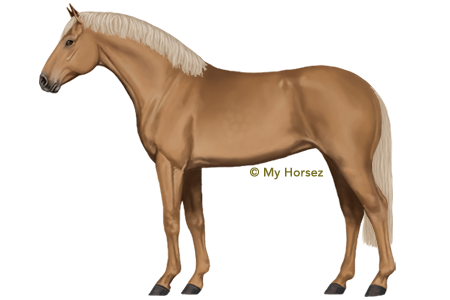
Palomino
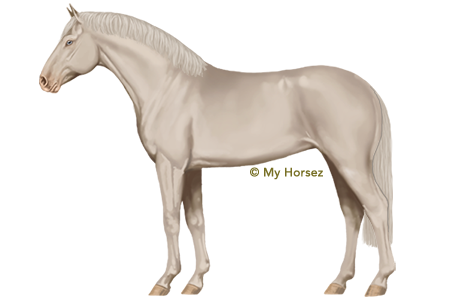
Cremello
Note: even a liver chestnut becomes a palomino or cremello depending on the number of "Cr" alleles.
Buckskin and perlino
Buckskin is a bay horse with 1 cream allele, and a perlino is a bay horse with 2x cream. Again, the incomplete effect of the gene can be clearly seen, but in addition to this, a difference can be seen in the colour the dilutions have. These differences in colour have to do with the difference in the colour that is diluted. Because for buckskin and perlino, bay is the colour that is diluted, and for palomino and cremello chestnut is the diluted colour, these dilutions differ from each other. Black pigment gets less diluted than red pigment. This can also be seen in the genotypes:
Buckskin: E_/A_/nCr
Perlino: E_/A_/CrCr
Buckskin: E_/A+/nCr
Perlino: E_/A+_/CrCr
Buckskin: E_/At_/nCr
Perlino: E_/At_/CrCr
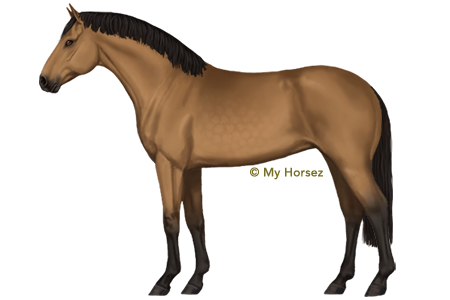
Buckskin
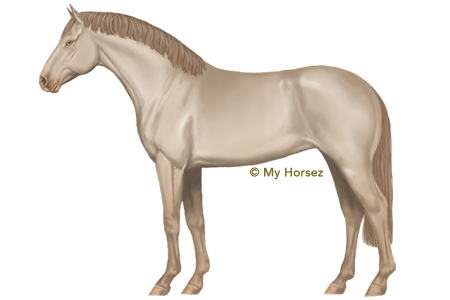
Perlino
Smoky black and smoky cream are colours created by diluting the base colour black. A single cream allele being present causes smoky black. Unlike the rest of the dilutions, this colour gives only a very subtle difference: a smoky black shows at most a brownish tint in a few places on the body, or sometimes no difference at all. Smoky cream is caused by the presence of 2x cream on the black base. This colour is somewhat similar to perlino, but is genotypically different.
Smoky black: E_/aa/nCr
Smoky cream: E_/aa/CrCr
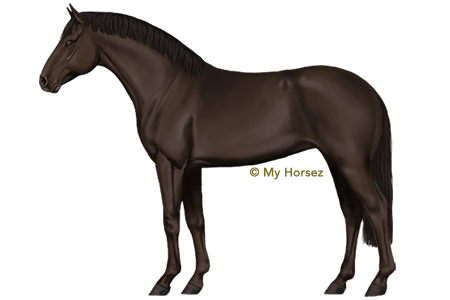
Smoky black
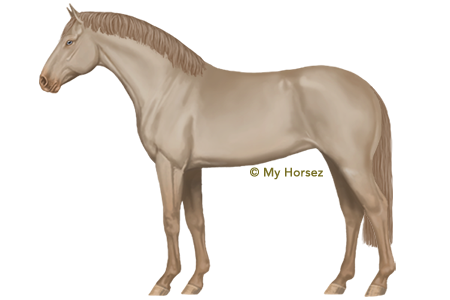
Smoky cream
Dun
Besides cream, there are of course other dilutions, including dun. Dun creates a slightly lighter body, a dorsal stripe and zebra stripes on the legs. The head, legs, mane and tail remain somewhat darker in colour. Dun (code D) is a dominant gene which can be expressed on any coat colour, also in combination with multiple dilutions. In addition, it can occur without problems in homozygous form, i.e. twice. It entails no adverse consequences. The only thing to watch out for is that bay dun and buckskin have similar colouring, only bay dun has the dosal stripe and zebra stripes on the legs. Bay dun and dunskin are also hugely similar, but dunskin is lighter!
Grulla (black dun): E_/aa/D_
Red dun (chestnut dun): ee/__/D_
Bay dun: E_/A_/D_
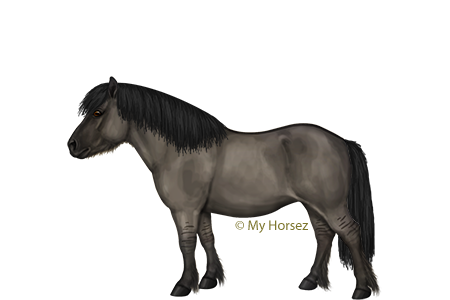
Grulla (black dun)
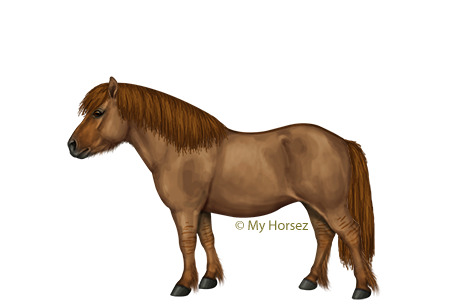
Red dun (chestnut dun)
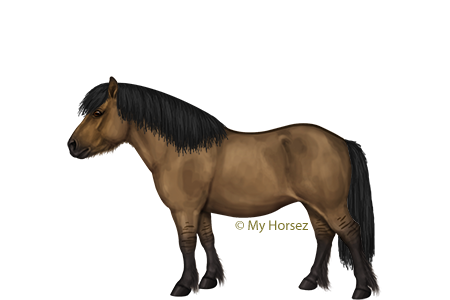
Bay dun
Note: Different bay alleles can occur in bay duns. The shade of bay does not affect the shade of bay dun. It is always the same, also in dunskin and perlino dun (this is because it has no influence at all on the dilution cream either).
Silver
Silver is another dilution to occur, and this gene is referred to as "Z". This gene is dominant, so only 1 Z allele is needed for a horse to be silver. However, there is a catch, as silver does not show on chestnut, palomino and cremello variants. However, horses with these colours can carry silver with them and pass it on to their foals. Foals with a black or bay colour (variant) will show silver. Silver changes the colour of the mane to cream/white and the coat varies from chocolate brown, to brown, to (chocolate) brown with dapples. In real life, homozygous silver (2x silver) causes eye problems, but on MH the double allele presence does not affect the horse.
Silver black: E_/aa/Z_
Silver bay: E_/A_/Z_
Silver buckskin: E_/A_/nCr/Z_
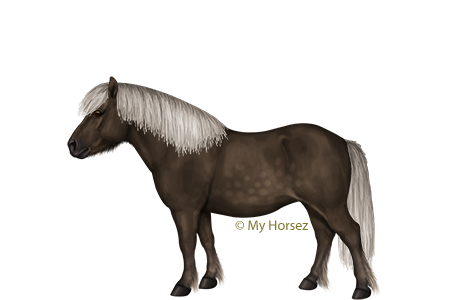
Silver black
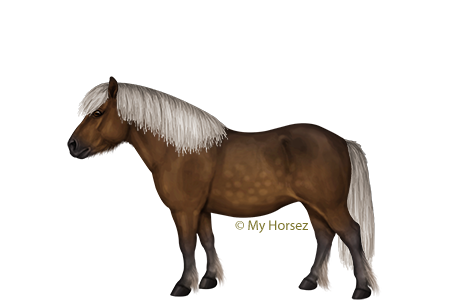
Silver bay
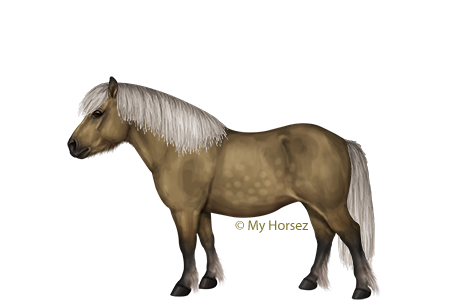
Silver buckskin
Note: Silver bay and silver buckskin can have different bay alleles. I have just taken the allele for dark bay for convenience, because the shade of bay makes no difference in dilution. This also applies to silver buckskin and silver perlino. As you can see with silver buckskin, cream has an influence on the shade of dilution. Cream also has an influence in black, although the difference between silver black and silver smokey black is much less.
Champagne
Besides the other dilutions, we also have the dilution Champagne. This gene causes a lighter coat and a pink nose. This dominant gene is denoted by "Ch" and there is no difference in single or double presence. Furthermore, this gene shows on all colours and goes well with other dilutions.
Classic Champagne: E_/aa/Ch_
Gold Champagne: ee/__/Ch_
Amber Champagne: E_/A_/Ch_
Sable Champagne: E_/ AtAt/Ch_ or E_/Ata/Ch_
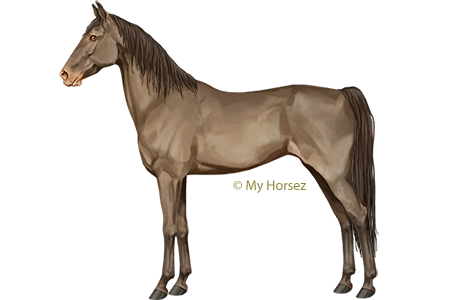
Classic champagne
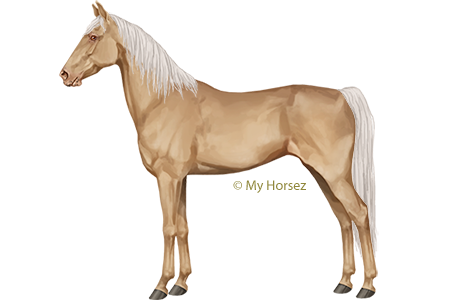
Gold champagne
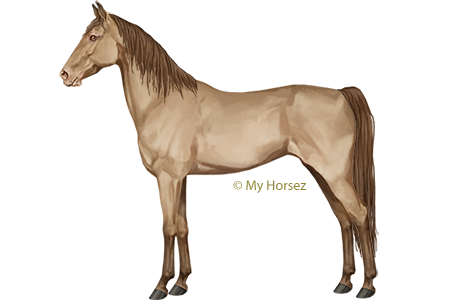
Amber champagne
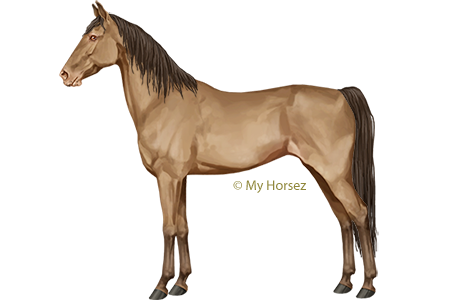
Sable champagne
Note: the diluted colours from left to right: black, chestnut, bay, seal brown. As you can see, seal brown has its own champagne variant, so Sable champagne only occurs if the horse has a Seal brown bay variant that is diluted with the Ch allele. The other 2 bay variants fall under Amber champagne when diluted by Champagne. Furthermore, you will again see the horizontal dashes explained earlier.
Grey
Grey is a gene that causes the lightening of the coat. A grey horse can be born in any colour, but becomes lighter and lighter as it ages: the horse greys out. The allele for grey is denoted by "G". Again, this is a dominant allele, causing the horse to grey out even when 1 grey allele is present. On MH however, this works slightly differently: when one allele is present, it produces dappled grey, and 2 alleles produce a white grey. On MH, foals with grey can also be born in all colours, but when they become 1 year old they grey out, so they become (dapple) grey. Grey shows on all colours. Grey horses can carry dilutions like cream and dun, but because the horse is grey it eventually shows all white. So grey dominates all other colours.
Dapple Grey E_/__/nG or ee/__/nG
Grey: E_/__/GG or ee/__/GG
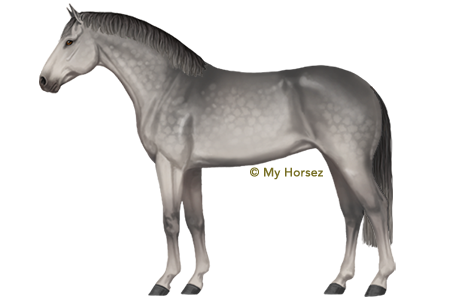
Dapple Grey
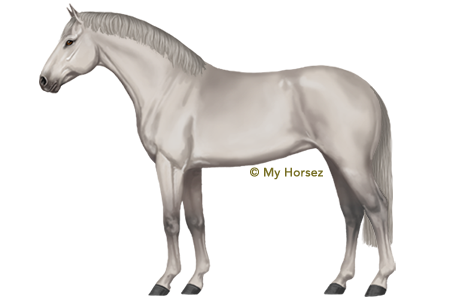
Grey
Note: The bay alleles have all been omitted and no other additional genes have been added to the genotypes in the explanation. This is because "G" completely dominates and the horse ends up white anyway. Based on the horse's colour when it is still a foal, you can possibly infer bay alleles and other genes.
Rose grey
On MH, Rose Grey gives a pinkish brown hue to a grey-coloured horse. Rose Grey is labeled as "Rg" in this article. In RL, the rose grey colour can be seen when a bay horse is greying out, but on MH it is a separate gene. Rose Grey only shows on a horse with a grey allele, so at least one "G" in the genotype. A dapple grey can have 2x rose, but will only show as Rose with dapples. A grey can have 1x rose, and thus show Rose.
Rose dapple grey: __/__/nG/nRg or __/__/nG/RgRg
Rose grey: __/__/GG/RgRg or __/__/GG/nRg
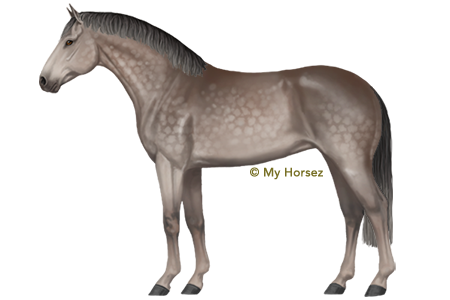
Rose dapple grey
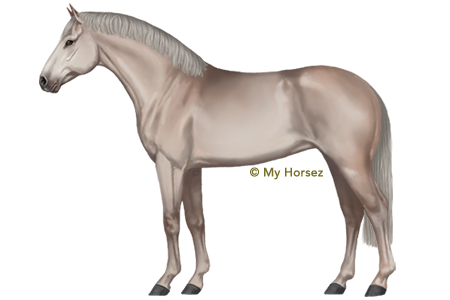
Rose grey
Note: All base and bay alleles have been omitted, and no additional genes have been added to the genotype, as this colour dominates all others given that the horse is greying out (with pink hue only). This does go with all coat varieties.
Fleabitten
Fleabitten, allele "flea" in this explanation, is a pattern visible on only some greys on MH. The gene here is recessive and therefore only shows itself when present twice, and only on a grey horse. The pattern is characterised by small dots scattered over the body that look like little flies, hence the name.
Fleabitten grey: __/__/GG/fleaflea
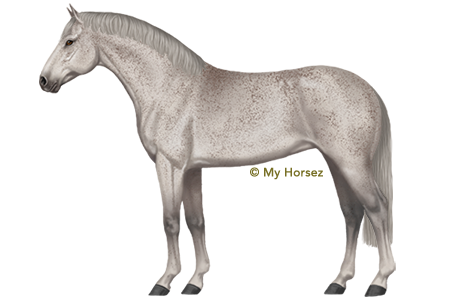
Fleabitten grey
Note: base alleles and agouti are omitted. It does not matter which base colour the horse has. Fleabitten grey dominates all other colours, but not rose. Rose dominates over fleabitten, hiding the fleabitten pattern.
Flaxen
Flaxen is a recessive gene which only shows on chestnut. Flaxen is denoted with an "f", so watch out for the lowercase letter! This allele causes somewhat lighter mane and lighter chestnut colour in only homozygous (2x f allele) presence. Because flaxen only shows on chestnut, other colours can carry this allele unnoticed, even in homozygous presence. Palomino and cremello can also carry this allele, but cream is dominant over flaxen, so it does not show. There are two shades in flaxen: flaxen chestnut and flaxen liver chestnut. Because on MH liver chestnut is caused by the Liver gene, for the explanation for Liver (Lv) we refer you to the "Liver" paragraph earlier in this article.
Flaxen chestnut: ee/__/ff
Flaxen liver chestnut: ee/__/Lv_/ff
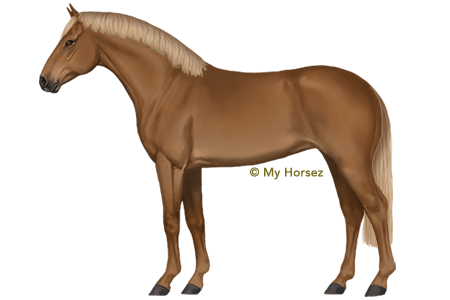
Flaxen chestnut
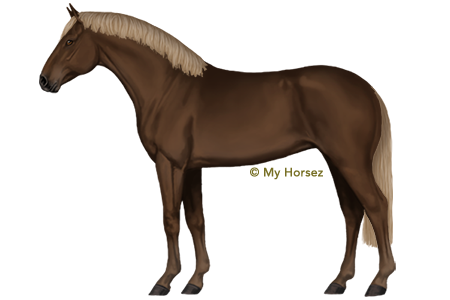
Flaxen liver chestnut
Sooty
Sooty is a colour factor that causes dark hairs in the coat. The dark hairs can be minimal to loudly present and all over the body. How does this affect the horse's colour? The horse's colour becomes darker! Example: A chestnut-coloured horse may colour liver chestnut-like or even appear almost black due to the presence of Sooty. Horses with a very dark colour can of course also carry Sooty, but of course a black horse cannot already become darker than it already is, so then you don't see the effect of this allele. So Sooty can express itself in many different ways, but on MH this effect is shown more clearly than in Real Life. For the sake of explanation, we set the Sooty allele as "Sty". Sooty is an incomplete dominant allele, just like cream, which therefore means that Sooty in heterozygous form (1x present) shows lighter than sooty in homozygous (2x present) form.
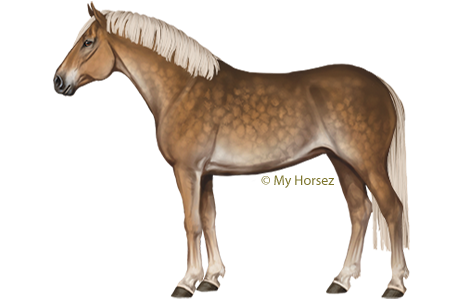
Sooty flaxen chestnut __/__/nSty
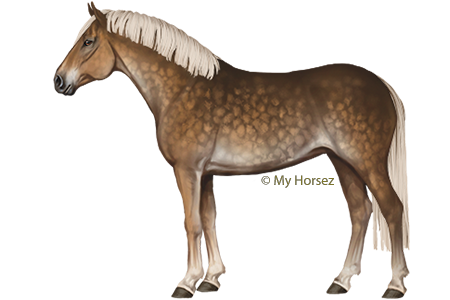
Sooty flaxen chestnut __/__/StySty
Pearl
Pearl is a dilution that causes the horse's coat colour to lighten and appear to have a slightly peachy hue. Pearl ("prl") is a recessive allele, but something special is going on with this allele! Pearl is a recessive allele and thus will only show when present twice. First: this is true. Second: there is another possibility for Pearl to show, which is the presence of 1x cream and 1x pearl (Crprl). In cases with cream and pearl combined, the colour is called pseudo-pearl. The colour manifests as a double dilute colour (cremello for example) but in cases with cream and pearl, the colour shows slightly darker than usual and the coat has a peachy tint.
Pearl: __/__/prlprl
Pseudo-pearl: __/__/nCr/nprl or __/__/CrCr/nprl or __/__/CrCr/prlprl
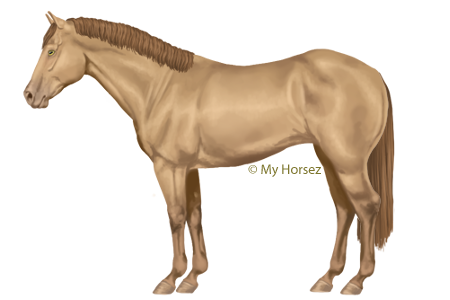
Pearl
Note: As you can see, both base and agouti genes have been left open. That is, when Pearl has double presence, or ‘Crprl’, on all bases it has an effect. However, keep in mind dominance of the genes left open and differences in colour variants, as explained earlier.
Mushroom
Mushroom is a gene found only in shetland ponies! It is a recessive allele, coded "mu", so it has to be present twice before it has an effect. The mu allele only shows on chestnut and bay horses, because it dilutes the red pigment. So, on black, which has only black pigment and no red, the mu allele cannot dilute anything! The colour Mushroom causes the red hairs to be diluted to a more greyish colour, and the originally red mane to be diluted to a cream or even a white colour. So, any horse that has a bay base with mushroom will show a greyer colour on its body. The horses with a chestnut base will also show a greyish colour and, in addition, lighter mane. If a horse carries the mu allele only once, the colour will not change, but the horse can pass on the mu allele to its foals!
Mushroom: ee/__/mumu or E_/A_/mumu
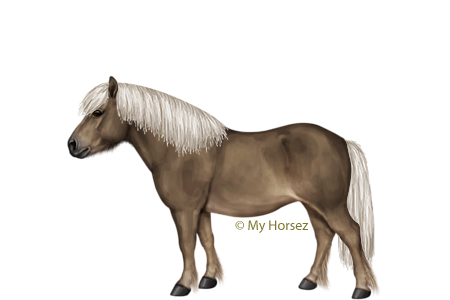
Chestnut mushroom
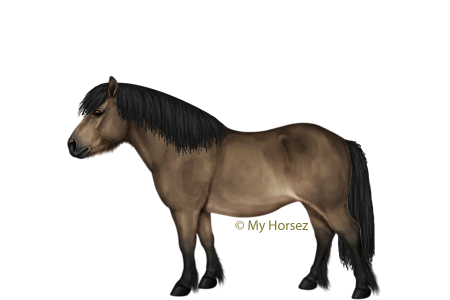
Bay mushroom
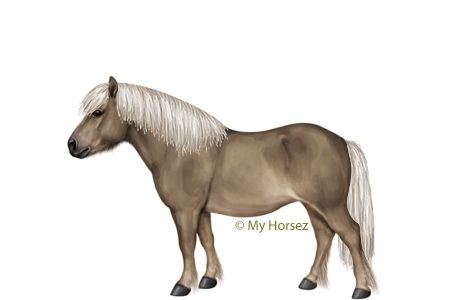
Palomino mushroom
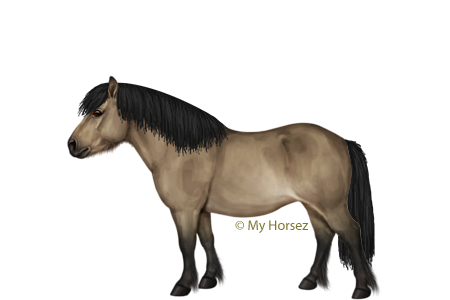
Buckskin mushroom
Pangare
Pangaré (also called Mealy) causes lighter areas on a horse's body. This is particularly noticeable on the underside of the belly, near the muzzle, on the inside of the legs and sometimes also on the flanks.
It is only visible on chestnut and bay bases and is common in breeds with more primitive characteristics such as the Belgian Draught Horse and the Haflinger. It softens the colour and provides camouflage, which helps protect the horse from predators in the wild. The gene responsible for Pangaré has not yet been discovered in real life.
In game, Pangaré is used if the horse has at least one pangaré trait. The base colour is then given the addition of pangaré. For example: instead of a normal flaxen chestnut, the horse becomes a Normal flaxen chestnut pangaré.
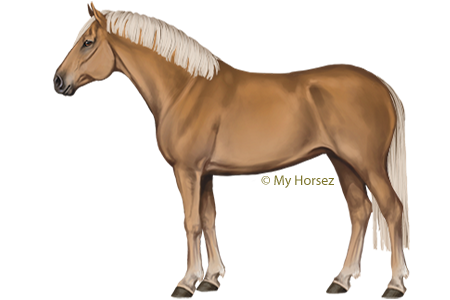
Normal flaxen chestnut (non-pangaré)
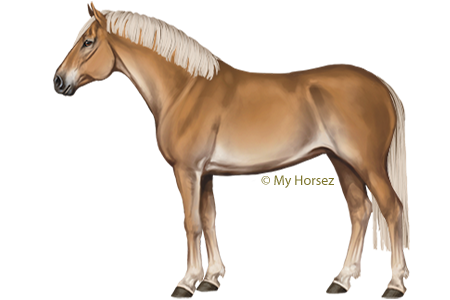
Normal flaxen chestnut pangaré